1. SAE Standard Hoses
One of the most widely used categories, SAE (Society of Automotive Engineers) standard hoses are designed to meet specific performance criteria. They are classified by the SAE J517 standard, which defines pressure ratings, construction, and performance.
Key Types:
- SAE 100R1: Single steel wire-braided hose used for medium-pressure applications.
- SAE 100R2: Double steel wire-braided hose for high-pressure hydraulic systems.
- SAE 100R12/R13: Multi-spiral wire-reinforced hoses designed for very high-pressure applications.
These hoses are versatile, providing excellent strength and durability in different environments.
2. Braided Hydraulic Hoses
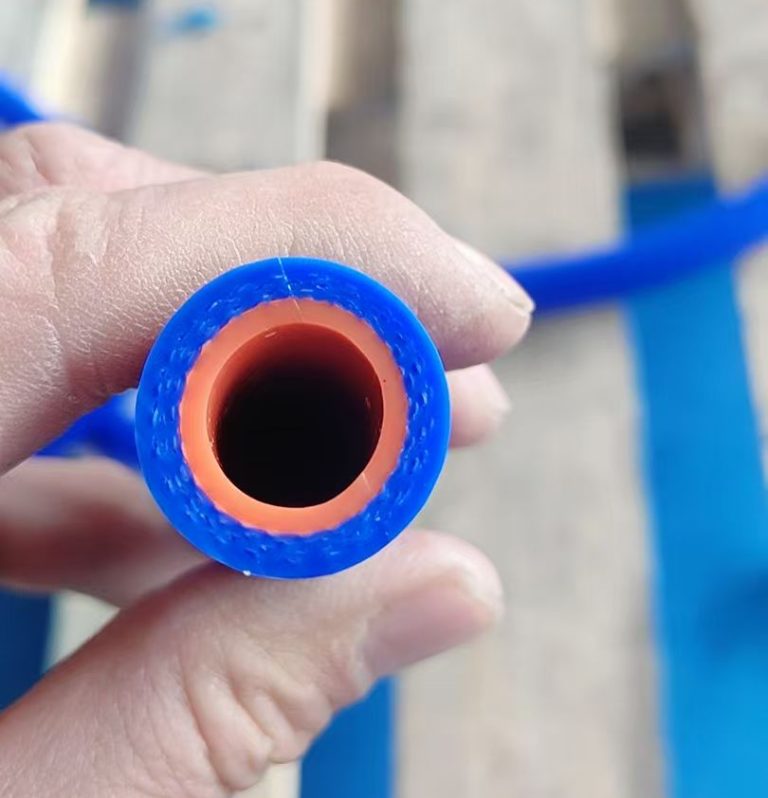
Braided hoses feature one or more layers of wire or textile braid reinforcement. The braiding gives them flexibility and strength, making them ideal for moderate-pressure applications in compact systems.
Types of Braided Hoses:
- Single-Braided (SAE 100R1): Typically used in hydraulic systems with moderate pressure requirements.
- Double-Braided (SAE 100R2): Designed for higher pressure and more demanding applications, offering increased durability.
Braided hoses are more flexible and easier to handle than spiral hoses, which makes them useful for tight spaces or where hose movement is frequent.
3. Spiral Hydraulic Hoses
Spiral hoses are reinforced with multiple layers of high-tensile steel wire, typically arranged in a helical pattern. These hoses are much stronger and can handle extremely high pressures, making them suitable for heavy-duty applications.
Key Types:
- SAE 100R12: Four layers of spiral wire reinforcement.
- SAE 100R13/R15: Hoses with multiple spirals for ultra-high-pressure applications, used in demanding industrial or mining operations.
Spiral hoses are more rigid than braided hoses, but their strength allows them to be used in high-pressure systems where performance and reliability are critical.
4. Thermoplastic Hydraulic Hoses
Thermoplastic hoses are made from synthetic materials, offering unique advantages over traditional rubber hoses. They are lightweight, resistant to abrasion, and can be used in both high and low-pressure applications.
Key Features:
- Non-Conductive: Ideal for applications where electrical conductivity is a concern, such as in electrical environments.
- Lightweight: Easier to install and maneuver, reducing fatigue during installation.
These hoses are often used in mobile equipment and machinery due to their flexibility and ease of handling.
5. PTFE Hydraulic Hoses
PTFE (Polytetrafluoroethylene) hoses are designed for applications that involve high temperatures or exposure to harsh chemicals. They offer superior resistance to heat, chemicals, and pressure, making them ideal for extreme environments.
Key Advantages:
- Heat Resistance: PTFE hoses can operate in temperatures ranging from -73°C to 260°C.
- Chemical Compatibility: They are unaffected by most chemicals and fluids, making them suitable for chemical processing industries.
PTFE hoses are often used in industries like aerospace, chemical manufacturing, and food processing.
6. Return and Suction Hoses
These low-pressure hoses are designed for conveying hydraulic fluid from a hydraulic pump back to the reservoir or vice versa. They are typically reinforced with textile braid rather than steel wire and are not meant for high-pressure applications.
Key Applications:
- Return Lines: Used to return fluid to the tank in hydraulic systems.
- Suction Lines: Used in applications where fluid needs to be drawn into the pump.
Though they operate under low pressure, return and suction hoses are critical for maintaining smooth hydraulic flow within the system.
Conclusion
Hydraulic hoses come in a variety of types, each designed to handle specific pressure ranges, fluid types, and environmental conditions. Whether you need a hose for medium-pressure equipment or extreme high-pressure environments, selecting the right type of hydraulic hose ensures safety, efficiency, and long-term performance. Understanding the different types of hoses helps you make informed choices for your hydraulic systems, ensuring they operate reliably in even the most demanding conditions.