1. Check for Flexibility and Elasticity
A good-quality rubber hose should have the right balance of flexibility and elasticity. When you bend or twist the hose, it should easily return to its original shape without signs of cracking or stiffness. Overly stiff or brittle hoses can indicate poor rubber composition or aging, which may lead to premature failure.
Test Tip: Bend the hose to see if it shows any signs of cracking or deformation. If it does, the hose may not be suitable for use under stress or movement.
2. Inspect the Outer Surface
The external appearance of the rubber hose can reveal a lot about its quality. A high-quality hose will have a smooth, uniform outer cover without any visible blisters, cracks, or imperfections. Additionally, the surface should feel durable but not overly hard, as this may indicate excessive aging or incorrect materials.
Test Tip: Run your fingers along the surface of the hose. If it feels uneven, excessively rough, or shows visible defects, it may indicate lower quality.
3. Examine the Inner Tube
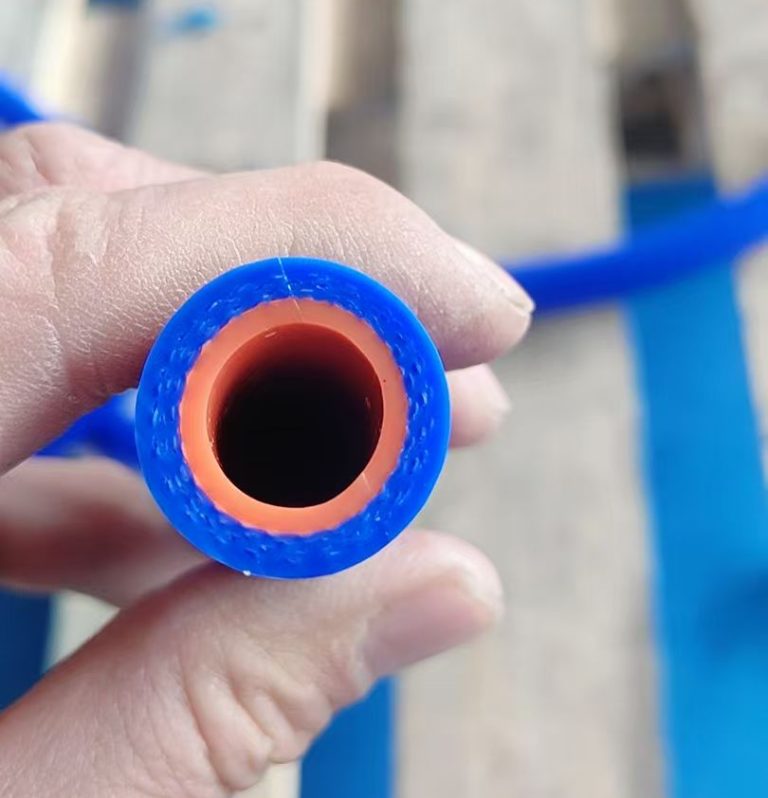
The inner tube of the hose plays a crucial role in fluid transportation. It should be resistant to the type of fluid it’s designed to carry and free from any cracks or delamination. Poor-quality rubber hoses may have inner tubes that degrade over time, causing leaks or contamination in the fluid system.
Test Tip: If possible, inspect the inner layer by bending a small section of the hose. Look for signs of deterioration, hardening, or soft spots, which can affect performance.
4. Check for Reinforcement and Pressure Rating
Rubber hoses are typically reinforced with fabric or wire layers to provide strength and resist pressure. The type and quality of reinforcement materials used directly impact the hose’s pressure rating and durability. Make sure the hose is properly reinforced to handle the intended pressure and has a clear marking of its pressure rating.
Test Tip: Confirm that the hose displays its pressure rating and material specifications. Hoses without these markings or with unclear information may not meet industry standards for safety and performance.
Conclusion
By following these four simple steps—checking flexibility, inspecting the outer and inner surfaces, and verifying reinforcement and pressure ratings—you can quickly determine whether a rubber hose is of high quality. Investing time in evaluating the quality of a hose ensures better performance, safety, and a longer service life, saving you from unexpected breakdowns and costs.