When selecting a hydraulic hose, it’s critical to understand the differences between high-pressure and low-pressure hoses to ensure optimal performance in various applications. Let’s take a closer look at their key differences, including commonly used models.
1. Pressure Ratings
The most significant distinction is the pressure rating. High-pressure hoses, such as SAE 100R1, SAE 100R2, and EN 856 4SH/4SP, are built to handle pressures ranging from 3,000 to 6,000 PSI or more. These hoses are ideal for heavy-duty applications, such as construction machinery and industrial systems requiring high-force hydraulic operations.
On the other hand, low-pressure hoses like SAE 100R3 and SAE 100R6 are designed for pressures below 1,000 PSI. They are often used in applications such as suction lines or low-force fluid transfers where the pressure demands are minimal.
2. Construction and Material
High-pressure hoses, such as the SAE 100R1, SAE 100R2, EN 856 4SH, and 4SP, are constructed with multiple layers of reinforced wire braids or spirals. This robust construction allows them to handle extreme pressures and rough working conditions.
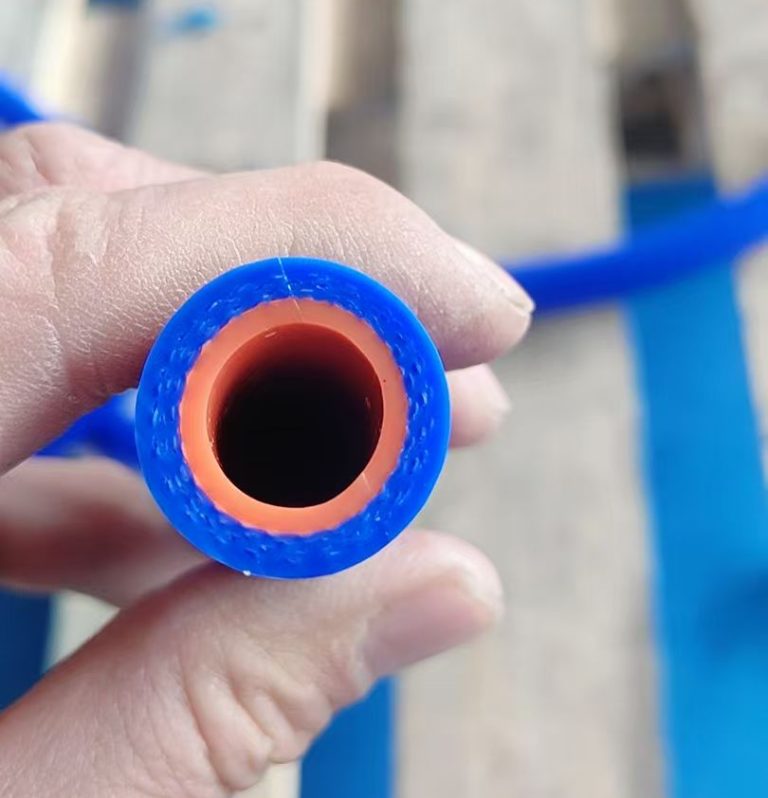
Low-pressure hoses, like the SAE 100R3 and SAE 100R6, are reinforced with textile braiding, making them lighter and more flexible. These hoses are commonly used in systems that do not require high pressure but need greater flexibility.
3. Applications
- High-Pressure Hoses: Models like SAE 100R1, R2, 4SH, and 4SP are used in industries such as mining, heavy machinery, and hydraulic systems requiring high force, such as lifting, drilling, and pulling.
- Low-Pressure Hoses: SAE 100R3 and R6 are commonly used for return lines, fuel lines, and air-conditioning systems, where flexibility is essential, and pressure demands are lower.
4. Cost
High-pressure hoses, such as 4SP and 4SH, are typically more expensive due to their heavier construction and ability to handle extreme conditions. Low-pressure options like R3 and R6 are more affordable and ideal for lower-pressure, lighter-duty applications.
Choosing the right hydraulic hose, whether it’s SAE 100R1 for high-pressure or SAE 100R6 for low-pressure, is crucial to system efficiency and longevity. Consult with experts or review manufacturer guidelines to ensure the correct hose selection for your application.